

• de
  • fr
  • it
  • en
  • Vincitori del premio
    • Premio 2025
    • Vincitore 2025
    • Vincitori precedenti
    • Più tardi vincitori di premi Nobel
  • Candidature
    • Candidature 2025
  • Premiazione
    • La premiazione 2024
    • La premiazione 2023
    • La premiazione 2022
    • La premiazione 2021
    • La premiazione 2020
    • La premiazione 2019
    • La premiazione 2018
    • La premiazione nel passato
  • Attività
    • Workshop 2025
    • Lecture 2025
    • Workshop 2024
    • Lecture 2024
  • Marcel Benoist
    • Il fondatore
    • Il lascito
  • Fondazione
    • La fondazione
    • Attuale
    • Consiglio di fondazione
    • Il Comitato di patrocinio e sostenitori
    • Sostenete l’eccellenza!
    • Il patrimonio della fondazione
    • Contatto
  • Vincitori del premio
    • Premio 2025
    • Vincitore 2025
    • Vincitori precedenti
    • Più tardi vincitori di premi Nobel
  • Candidature
    • Candidature 2025
  • Premiazione
    • La premiazione 2024
    • La premiazione 2023
    • La premiazione 2022
    • La premiazione 2021
    • La premiazione 2020
    • La premiazione 2019
    • La premiazione 2018
    • La premiazione nel passato
  • Attività
    • Workshop 2025
    • Lecture 2025
    • Workshop 2024
    • Lecture 2024
  • Marcel Benoist
    • Il fondatore
    • Il lascito
  • Fondazione
    • La fondazione
    • Attuale
    • Consiglio di fondazione
    • Il Comitato di patrocinio e sostenitori
    • Sostenete l’eccellenza!
    • Il patrimonio della fondazione
    • Contatto

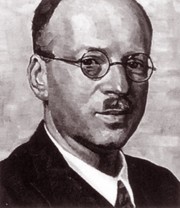
Leopold Ruzicka

Premiato 1938: Leopold Ruzicka

«[…] per i suoi studi e le sue ricerche d’eccellenza nel campo degli ormoni sessuali e dei politerpeni […]. La sua opera riveste una grande importanza in relazione a molti problemi che interessano la vita umana e ha fatto guadagnare al professor Ruzicka i più prestigiosi riconoscimenti da parte della comunità scientifica mondiale.»

Mit seinen Arbeiten zu den Polyterpenen stiess R. die bis dahin herrschende Lehrmeinung um, wonach Kohlenstoffringe mit mehr als acht Ringen nicht existenzfähig seien (Baeyersche Spannungstheorie): Er konnte zeigen, dass sich vielgliedrige Kohlenstoffringe in ihrer Beständigkeit wie offenkettige Polymethylenverbindungen verhalten. R. griff dabei zur Methode der Dehydrierung der Polyterpene zu aromatischen Kohlenwasserstoffen, deren Struktur entweder bekannt oder relativ leicht zu klären war. Indem R. arbeitshypothetisch die bereits früher isolierten menschlichen Sexualhormone als biologische Abbauprodukte des Cholesterins auffasste, gelang ihm die Synthese von Androsteron und Testosteron. Die Entdeckungen R.s fanden in der Riechstoffindustrie (Parfums), in der Medizin und in der pharmazeutischen Industrie Anwendung.

Contatto

Fondazione Marcel Benoist
Segreteria di Stato per la formazione,
la ricerca e l’innovazione SEFRI
Einsteinstrasse 2
CH – 3003 Berna
Svizzera

  • Informazione legale